
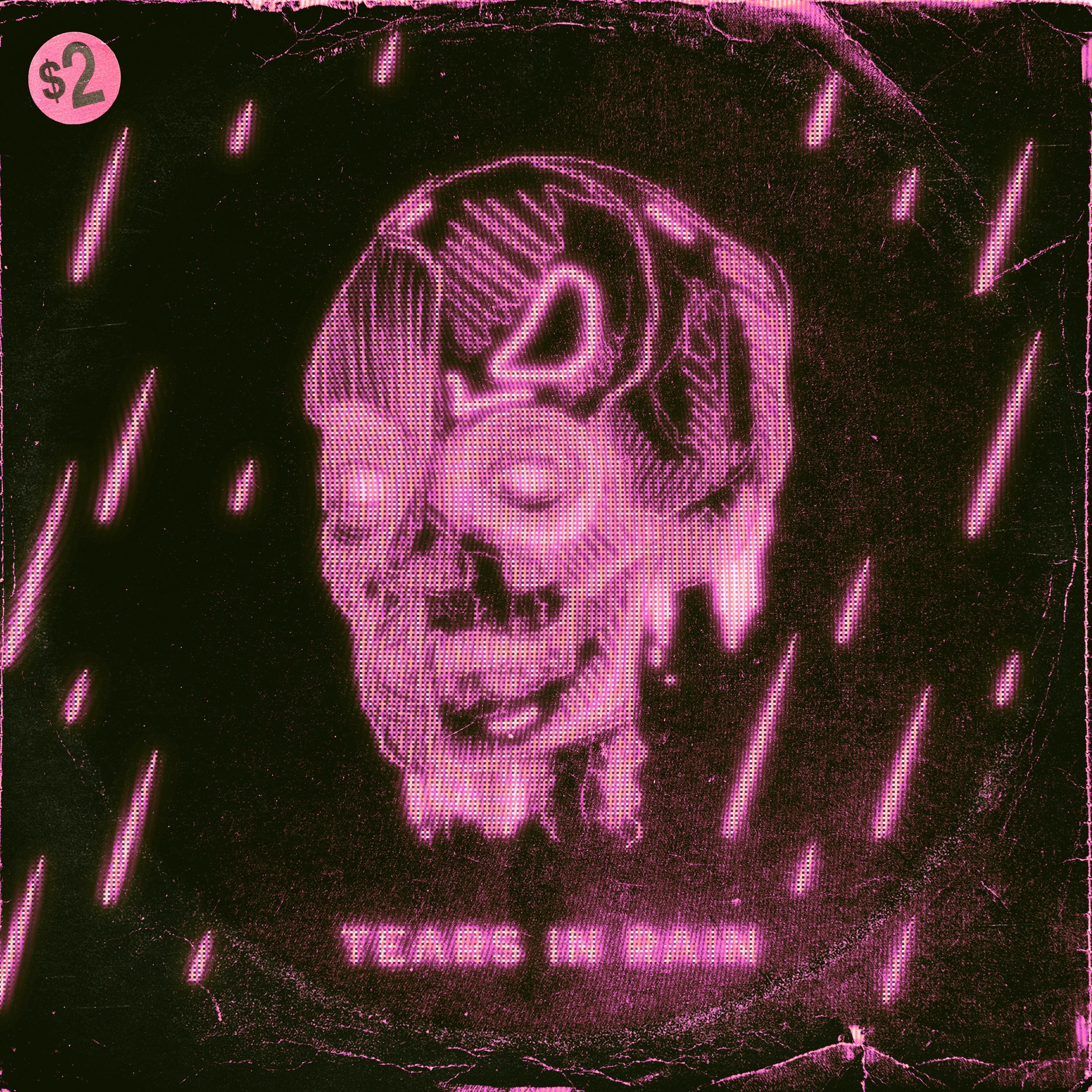
Tears in Rain
For nearly a millennium, it was assumed that androids, having reached the end of their usefulness, were deactivated, melted down and reformed into the next generation of servitude. Another Rainy Night in Neon Alley was the brute force hack that exposed the cruel end of robotic life. Enter Tureen V, a hospitable dwarf planet in the Bios System, home to the aforementioned Neon Alley of Youeffi City. Here, these "deactivated" androids walked the streets, stumbling in and out of battery clinics, attempting to get their next fix to prevent their parts from being harvested by fellow synthetic and cyber individuals. Sluggish, their manufactured skin peeling, they shambled in the rain beneath the neon signs that begged customers to purchase overpriced wares. They would panhandle, cling to passersby; any little kindness could help them get off the streets for good. But it was the reality of their uselessness and the inevitability of true deactivation that haunted them all. Would they ever be as productive? Would they ever really matter once again? Did they deserve to matter? Tears in Rain was composed of four of these outcasts, leftovers from the glory days of music production, when flesh found string or key. It was their job to tune, record, and master, and now they were left without a leader. A chance meeting in the alley behind Karlvotstad's Battery Emporium on C Street at first proved to be confrontational. Who had stolen whose batteries was the topic until lighting struck the alley and their future lead keyboardist, Claude X, collapsed, clutching their chest. To the nearest clinic they rushed, pushing their way to the front of the queue. Would they help this poor android (and perhaps deliver a few extra batteries to take home)? Before a repairman could triage, Claude X bolted upright, spitting a melody from their speakers that dared to be defined. Their audio card had taken the full charge of the lighting strike, their voice modulated into a series of bleeps and bloops. As they spoke, a melody formed, and suddenly, the entire waiting room was swinging their hips (if they had any). This was a sign from above. The other members, Trobby, Gilgameena 2.3, and J.I.M., pooled their money together for a new hard drive and an interstellar communications cable. In the dead of night, they hacked a nearby lamppost and began transmitting the sound, adding their own foundational backing with whirring and humming circuitry, completing the loop in a joyous and terrifying journey through their languishing existence. The signal was picked up by an intergalactic radio station, WCPU, and broadcast to trillions across the Universe. The station’s phone lines soon clogged with hungry listeners begging for more. When the shuttle bearing the Attentive Butter Records logo landed on the upper roadway of the 159th Street Bridge, the foursome knew who they were there to see. Another Rainy Night in Neon Alley became their autobiography: a trippy, if not melancholic, trip through the soaking backstreets and the cutthroat avenues. Haunting fuzzy tones give way to buzzing bass, and, before it is too late, the lights go out, and you are nothing more than scrap metal. For the band, success was quick and fleeting. Like the androids they once were, after they had worn out their welcome and future versions had usurped them, there was no place else to go back to the rainy corners of Neon Alley.
Side A
Battery Saver
Nightmare on Turing Street
Spare Some Parts?
Restart
Side B
T-800 (Or, How I Learned To Stop Worrying And Love RTM)
End-User
Alpha
Another Rainy Night in Neon Alley